
Window Sound Transmission Coefficient

From hgtvremodels.com

By Craig A. Shutt

*Window Sound Transmission Coefficient*

If your clients complain that they’re tired of hearing the next-door neighbor mowing his lawn at 7 a.m. Saturday or are sick of his barking dog, they’re offering you a great opportunity if you are up-to-date on the acoustic control benefits of new window designs and window-installation techniques. Window manufacturers are well aware of the increasing demand for enhanced window acoustics.

Two key factors affect a window’s sound transmission coefficient (STC): the window’s design and its installation, Head says. Windows, as with other materials, are rated with an STC, which indicates how well the window blocks sound waves. A typical double-pane window with 2 1/2-mil, single-strength glass provides an STC rating of about 28 to 32. The higher the STC number, the better the sound control. Airport locations often require windows with a 35 to 40 STC rating. The good news is that excellent acoustic control works hand in hand with high energy efficiency. The same air that brings in noise also brings in air that must be cooled or heated, reducing energy efficiency. When you select high performance windows that lower energy costs, you gain the added benefit of less noise intrusion, Head explains. Proper sealing during installation is also vital. The best way to reduce noise infiltration is through a high-quality weatherstripping system, Head says, since the weather stripping is usually the weak link in the system. “It’s easier to penetrate than wood or glazing. Weatherstripping both the frame and the sash creates additional points of contact to reduce infiltration of anything — dust, water, air, sound.” Window manufacturers are working to create window designs that do more to foil noise infiltration. The key is to disrupt the sound waves as they pass through the window. This can be done by using different thicknesses of glass, creating different vibrations that deflect the waves. Additional layers, such as with a tri-pane system, also can be beneficial. Vinyl-window makers achieve this acoustic disruption by creating baffles and catacomblike systems in their hollow extrusions; that also creates thermal breaks that aid energy efficiency.

Laminated glass may aid noise reduction because it is a thicker product. The additional cost for laminated glass is significant, but the product also provides enhanced safety levels.

Noise is encroaching more and more, Head adds. “We’re becoming more urban, with higher density in home construction. That creates more need for us to block out neighbors and traffic.” Selecting windows with higher Sound Transmission Coefficient ratings and insisting on tighter seals during installation can go a long way toward keeping out this noise pollution.
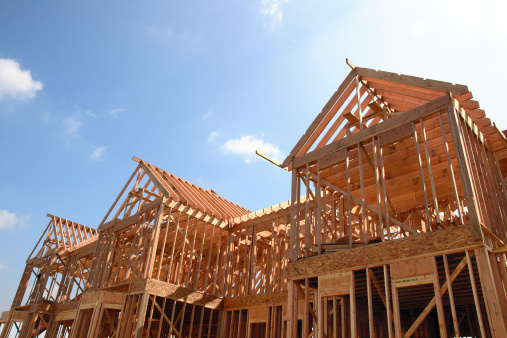
Homebuilder confidence soars to 7-year high

Homebuilder confidence soars to 7-year hig

Construction
New Construction is up in 2013

6/17/2013

 
For the first time in seven years, most U.S. homebuilders are optimistic about home sales, a sign that construction could help drive stronger economic growth in coming months.

The National Association of Home Builders/Wells Fargo builder sentiment index released Monday leaped to 52 this month from 44 in May.

A reading above 50 indicates more builders view sales conditions as good, rather than poor. The index hasn’t been that high since April 2006, just before the housing market collapsed.

Measures of customer traffic, current sales conditions and builders’ outlook for single-family home sales over the next six months also soared to their highest levels in seven years.

The housing recovery is looking more sustainable and should continue to boost economic growth this year, offsetting some of the drag from higher taxes and federal spending cuts.

Steady hiring and low mortgage rates have encouraged more people to buy homes. The increased demand, along with a tight supply of homes for sale, has pushed home prices higher. That’s made builders more optimistic about the market for newly built homes, leading to more construction and jobs.

In April, applications for new home construction reached a five-year peak. And sales of new homes rose to a seasonally adjusted rate of 454,000, nearly matching the fastest pace since July 2008. Sales are still below the 700,000 pace considered healthy by most economists. But they have risen 29 percent in the past year.

In recent weeks, many of the major large homebuilders have reported strong annual growth in sales during the spring home-selling season. The increased demand has paved the way for builders to raise prices and ramp up construction of more homes, despite lingering concerns over rising costs for land, building materials and labor.

“Builders are experiencing some relief in the headwinds that are holding back a more robust recovery,” said David Crowe, the NAHB’s chief economist.

Though new homes represent only a fraction of the housing market, they have an outsize impact on the economy. Each home built creates an average of three jobs for a year and generates about $90,000 in tax revenue, according to NAHB statistics.

The latest builder confidence index was based on responses from 255 builders.

A gauge of current sales conditions for single-family homes jumped eight points to 56, the highest level since March 2006, while a measure of traffic by prospective buyers improved seven points to 40.

Builders’ outlook for single-family home sales over the next six months increased nine points to 61, the highest reading since March 2006.

On a regional basis, confidence grew strongest among builders in the South, while firms in the Northeast and Midwest also posted a gain. An index of confidence among builders in the West declined by one point.

ANDERSEN CORPORATION HONORED WITH 2013 ENERGY STAR® PARTNER OF THE YEAR

BAYPORT, Minn. The U.S. Environmental Protection Agency (EPA) has recognized Andersen Corporation with a 2013 ENERGY STAR® Partner of the Year – Sustained Excellence Award for the company’s continued leadership in protecting the environment through superior energy efficiency. The distinction recognizes Andersen Corporation’s family of brands including Andersen® windows and doors, Renewal by Andersen® replacement windows, E-Series/Eagle® windows and doors, American Craftsman® windows and doors and Silver Line® windows and doors.
The ENERGY STAR Partner of the Year – Sustained Excellence distinction is reserved for ENERGY STAR partners demonstrating outstanding leadership year after year. The 2013 Partner of the Year – Sustained Excellence Awards are given only to organizations that have been named ENERGY STAR Partner of the Year for three or more consecutive years. This is the second consecutive year Andersen has received the Sustained Excellence distinction…..