Paper published in prestigious journal laments ‘democracy’ & calls for ‘authoritarian environmentalism

The paper’s author Ross Mittaga, calls for “authoritarian environmentalism” to address the alleged climate “emergency.” : “It is ultimately an empirical question whether authoritarian governance is better able to realize desired environmental outcomes and, if so why and to what extent? Yet, it is undeniable that nearly all wealthy democratic states have failed to respond adequately to the climate crisis. By contrast, various less affluent authoritarian regimes have been successful in implementing stringent climate policies…”  

Read the full article at: www.climatedepot.com

When I saw the left give up everything I believe in, I changed politically. You can too.

When I saw the left give up everything I believe in, I changed politically. You can too.

or many years—most of my politically cognizant life, in fact—I felt secure in my politics. Truth and justice, I believed, leaned leftward. If you were some version of a decent human being, you cared about those less fortunate than you, which meant that you supported a whole host of measures designed to even the playing field a little. Sometimes, these measures had unintended consequences (see under: Stalin, Josef), but that wasn’t reason enough to despair of the long march to equality. Besides, there was hardly an alternative: On the other end of the political transom lurked despicable creeps, right-wing orcs who either cared for nothing but their own petty financial interests or, worse, pined for benighted isms that preached prejudice and hate. We were on the right side of history. We were the people. We were the ones giving peace a chance. And, no matter the present, we were always the future.

This belief carried me through high school, and a brief stint in a socialist youth movement. It accelerated me in college, sending me anywhere from joint marches with Palestinians to a two-week hunger strike in Jerusalem trying (and failing) to lower tuition for underprivileged students. It pulled me to New York, to Columbia University, to more left-wing politics and activism and raging against Republicans whose agenda, especially in the 2000s, seemed like nothing more than greed and war.

And it wasn’t just an ideology, some abstract set of convictions that were accessible only through cracking open dusty old books. It was the animating spirit of life itself: The dinner parties I attended on the Upper West Side required dismissive comments on President Bush just as much as they did a bit of wine to make the evening bright, and there was no faster or surer way to signal to a new acquaintance that you were a kindred spirit than praising the latest Times editorial. It wasn’t performative, exactly. At least, it felt real enough, the reverent rites of a good group of people protecting itself against the bad guys.

I embraced my people, and my people embraced me. They gave me everything I had always imagined I wanted: a Ph.D. from an Ivy League university; a professorship at NYU, complete with a roomy office overlooking Washington Square Park; book deals; columns in smart little publications; invitations to the sort of soirees where you could find yourself seated next to Salman Rushdie or Susan Sontag or any number of the men and women you grew up reading and admiring. The list goes on. Life was good. I was grateful.

And then came The Turn. If you’ve lived through it yourself, you know that The Turn doesn’t happen overnight, that it isn’t easily distilled into one dramatic breakdown moment, that it happens hazily and over time—first a twitch, then a few more, stretching into a gnawing discomfort and then, eventually, a sense of panic.

You may be among the increasing numbers of people going through The Turn right now. Having lived through the turmoil of the last half decade—through the years of MAGA and antifa and rampant identity politics and, most dramatically, the global turmoil caused by COVID-19—more and more of us feel absolutely and irreparably politically homeless. Instinctively, we looked to the Democratic Party, the only home we and our parents and their parents before them had ever known or seriously considered. But what we saw there—and in the newspapers we used to read, and in the schools whose admission letters once made us so proud—was terrifying. However we tried to explain what was happening on “the left,” it was hard to convince ourselves that it was right, or that it was something we still truly believed in. That is what The Turn is about.

Read the full article at: www.tabletmag.com

Tumblr goes overboard censoring tags on iOS to comply with Apple’s guidelines

Tumblr has banned a long list of tags on iOS to comply with the App Store’s rules on sensitive content, affecting the content users see on their dashboard and search pages. However, some tags, like “girl,” “selfie,” and “sad,” don’t appear to violate any safety policies.

Another Tumblr user, aptly named “bannedtags,” has been keeping track of all the blocked tags in a Google Doc. The user notes that most of these tags have been banned on iOS —not on all devices — and that the listed tags are subject to change. Some banned tags are blatantly related to sexual, violent, or harmful content, but others don’t seem to belong on the list, and may actually do more harm than good by staying on it.

For example, “girl,” “sad,” and oddly enough, “Alec Lightwood,” an actor from the show Shadowhunters, has been banned (because even Tumblr can’t handle those eyes). “Single dad,” “single mom,” “single parent,” “suicide prevention,” and “testicular cancer” are also on the list, potentially harming those who want to seek support in any of these areas.

To make things even weirder, Tumblr blacklisted some tags that basically function as unspoken social cues on the site. “Me” and “my face” are blocked, both of which are tags that bloggers use to label their selfies (oh, and did I forget to mention that “selfie” is banned, too?). The platform appears to have blocked “queue” as well, a tag that’s typically applied to posts that were placed in a queue and serves as a signal to followers that they may not be online at the moment.

Read the full article at: www.theverge.com

Wokeness is a hot topic in Europe

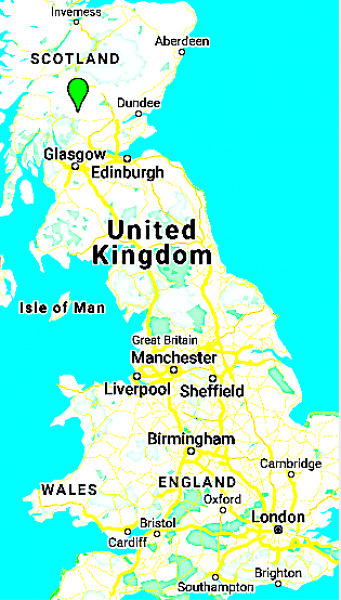
Scotland: The Wokeist Country in Europe?  Not a title anyone should aspire to.

Scotland illustrates how American-style “wokeness,” complete with its identity-politics, victim-culture assumptions and lexicon, has seeped across the Atlantic to Europe. While the U.S. media has given broad coverage to the rise of far-right anti-immigrant parties in countries like France, Germany, Hungary and Poland, it has paid less attention to the emergence of a mirror-image phenomenon on the left, which demands an orthodoxy of opinion and punishes dissenting ideas

Read the full article at: www.realclearinvestigations.com